What is a wildlife corridor?
We in India hold some of the world’s extraordinary wildlife, which includes more than 60% of the population of Asian elephants and 75% of wild tigers, including various other highly endangered and endemic species. To conserve and protect this wonderful array of wildlife, various protected areas have been created, which include national parks, wildlife sanctuaries, conservation reserves, tiger reserves, and elephant reserves.
But on the other hand, India is a fast-developing nation, and to grow like that, we need infrastructures that are supposed to be constructed at the cost of wildlife and protected areas.
The rapid urbanization and fast deforestation fragment the forests into small patches, but with the growing needs of modern societies, developmental activities are necessary. These developmental activities include the construction of highways, railway lines, power lines, pipelines, and canals. These constructions inside the forests are called linear intrusions, which fragment the forests into two different patches, isolating the population of wild animals on both sides.
Although several animals get affected by the linear intrusion, the mostly affected animals are big mammals, which include tigers, leopards, elephants, bears, rhinos, gaur, and several species of monkeys.
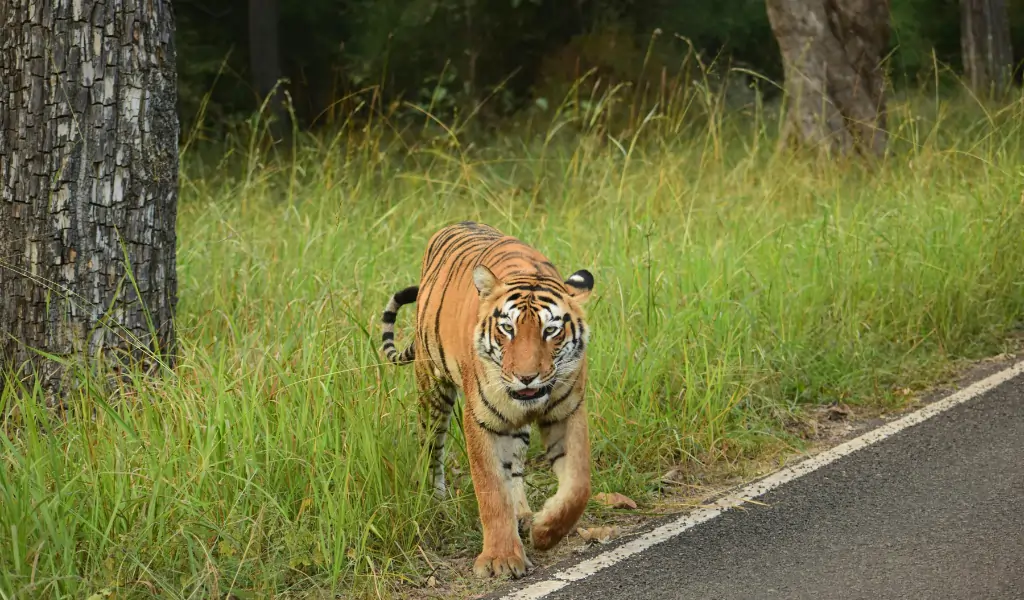
These linear intrusions obstruct the free movement of wildlife through forests and create isolated populations. These intrusions create barriers that restrict the movement of species dependent on landscape-level movement for finding mates, seasonal migration, and accessing resources like water and food, as well as for avoiding inbreeding, confining them to just one patch of forest.
Kanha-Pench Corridor and Highway underpass
The Kanha–Pench Corridor is one of the most studied wildlife corridors in India. Various conservation organizations, like WWF-India (Worldwide Fund for Nature) and FES (Foundation for Ecological Security), are active in the corridor and regularly monitor it. There are several linear intrusions in the corridor, the major one being NH 44 and the expansion and conversion of the Nainpur-Balaghat section of the narrow-gauge railway line to broad gauge.
The mitigation measures adopted in KPC are the following:
- Elevated highway and Underpasses: Approximately 16 km of the highway that passes through the corridor and reserve is elevated. There are several underpasses that have been created along with the soundproof barrier on the side of the road to minimize the disturbance.
- World’s longest underpass: An underpass 750 meters long was built as part of this project. The images captured by camera traps show that the underpass is used by tigers, leopards, sambar, gaur, and other species of animals found in both the connected reserves.
- Monitoring: There is regular monitoring of the efficacy of this structure by the forest department and the researchers.
Delhi – Dehradun Expressway Animal Underpass for Raja ji Tiger Reserve
The recently inaugurated Delhi-Dehradun Expressway passes through the Rajaji Tiger Reserve in Uttarakhand. This expressway cut short the travel time between Delhi and Dehradun from 6 hours to 2.5 hours. A 12-km elevated corridor, which is the largest in Asia, has been constructed on the stretch of the road that passes through the tiger reserve. This corridor included multiple animal underpasses to allow safe passage for tigers, elephants, and other big mammals.
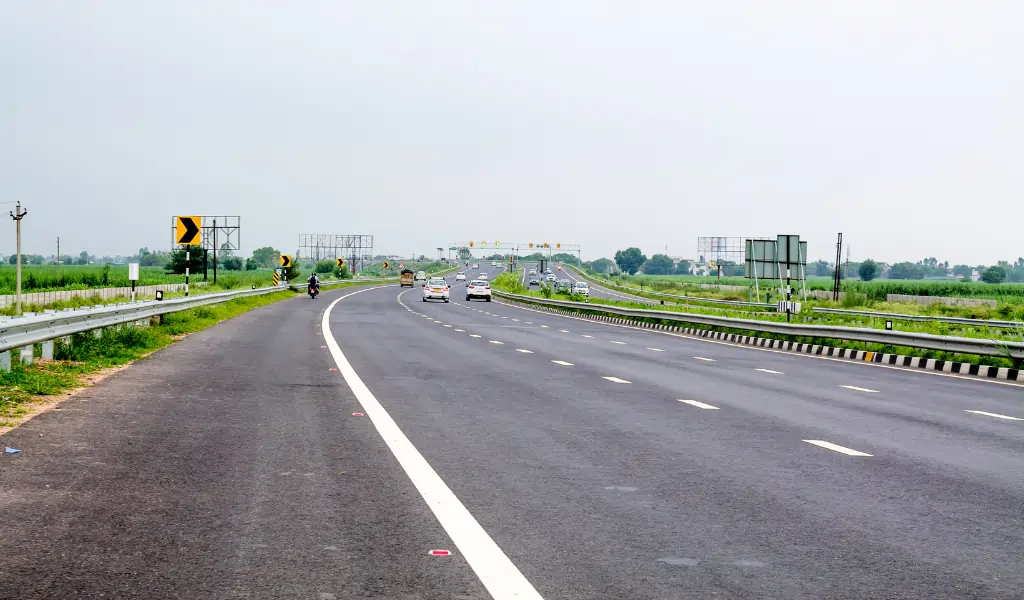
This project features two large underpasses for elephants, eight dedicated animal passes, and a 340-meter tunnel. The elevated corridor is designed in such a way so that the largest animals, the elephants, could pass through it. The elevated corridor offers a 6–7-meter clearance for the animals. The sound and light barriers are also installed to prevent disruptions caused by traffic passing through highways. A camera trap study done on a stretch of 40 days has recorded over 40,000 animals of 18 different species using the underpass.
Canopy bridges for golden langurs near Manas Tiger reserve
In the year 2025, four hanging canopy bridges were installed in Assam near the Manas tiger reserve for the golden langur (Trachypithecus geei), a highly endangered species of primate endemic to the Eastern Himalayas. These bridges, built by the forest department and the local community, show care and commitment for the golden langur. The bridges are made from sturdy plastic-coated material to prevent electrocution and road accidents.
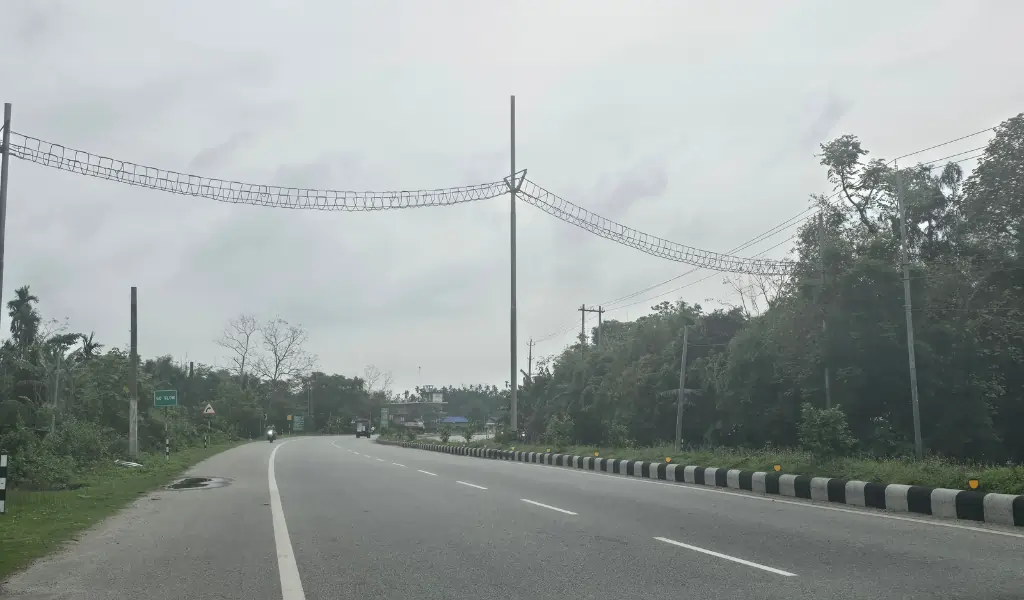
These bridges are installed around the Bongaigaon/Kakoijana reserve forest, which serves as a vital corridor near the Manas landscape. The structure is installed 9–10 meters above the ground, allowing the langurs to cross 30-meter-wide highways without going down to the ground. The langurs started using the bridge within 5 days of installation.
Bridge for Gibbons in Gibbon wildlife sanctuary
Gibbon Wildlife Sanctuary is a small 20 sq km protected area in Assam that is renowned for its primate diversity, especially hoolock gibbons, and is surrounded by tea gardens from all sides. There is a railway line passing through the sanctuary, which further fragments the forests into two patches. Most of the primates in the sanctuary are canopy dwellers who often cross the railway line in search of resources on the other side, which endangers their lives.
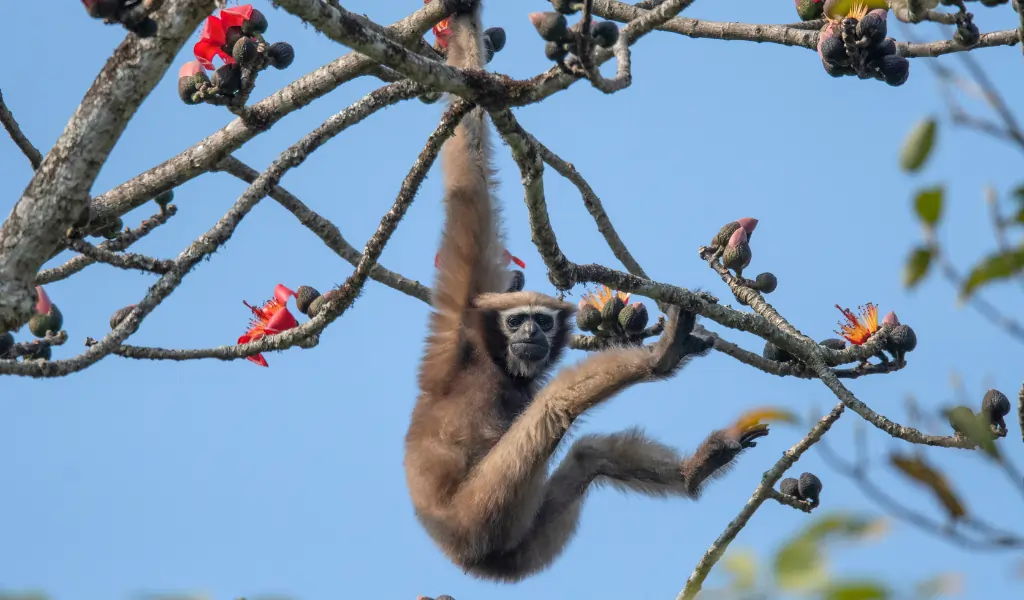
To provide some kind of connectivity, the Wildlife Institute of India, the forest department of Assam, and Northeast Frontier Railways have come up with a solution: making a canopy bridge for the movement of primates, especially gibbons.
These canopy bridges were built to connect the forests on both sides of the railway line. The bridges are constructed using mountaineering-grade ropes, vines, and wood to create a natural-looking overpass for the primates and other tree-dwelling animals like Malayan giant squirrels.
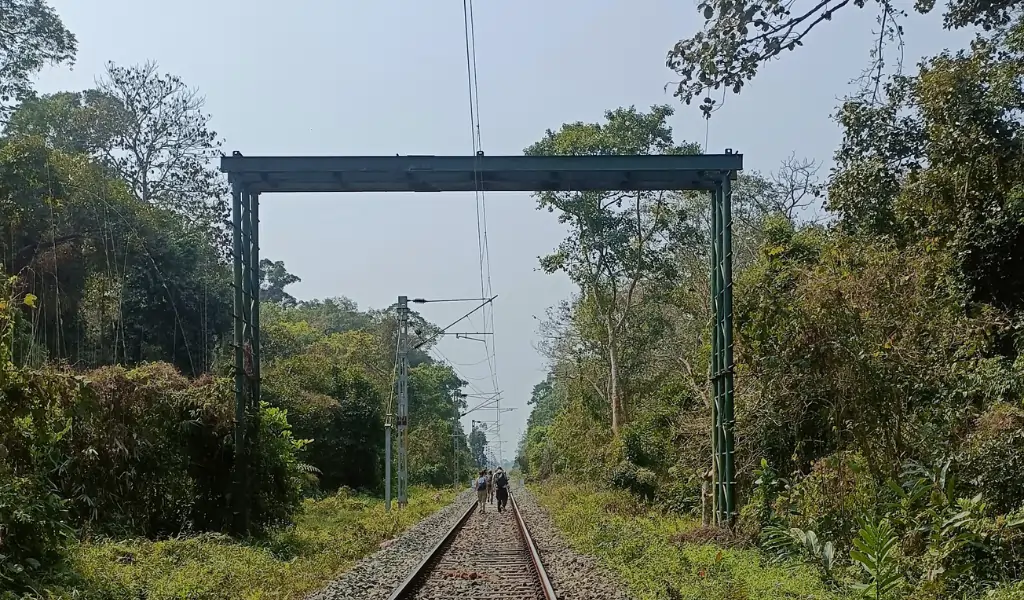
Previously, the bridges were made using iron rods, which were rejected by gibbons. Then the Northeast Frontier Railways and Forest Department approached the Wildlife Institute of India, which designed the current bridge, which looks more natural and is used by gibbons and other primates.

More examples of mitigation measures for linear intrusion in protected areas
In India, apart from those mentioned above, there are several examples of mitigation measures for linear intrusion. The Mumbai-Nagpur Samruddhi Mahamarg includes multiple overpasses specifically designed to connect fragmented habitats. Installing bird deflectors and insulating wires or shifting overhead lines underground to reduce electrocution risks for birds and arboreal mammals. The Ranthambore tiger reserve has a dedicated wildlife overpass on the Delhi-Mumbai expressway.
These mitigation measures show our commitment to the conservation of wildlife with ongoing developmental projects. Though these projects destroy the habitat, at some points they are necessary, and creating an underpass, overpass, and canopy bridges solves the problem of fragmentation at a considerable level.
If you like our blog, also give a read to Communicable Animal Diseases: A Tragic Death of Tigers and The Royal Bengal Tiger: All About The Pride of the Jungle

Mr. Vibhav Srivastava is a trained wildlife expert and ecotourism specialist. He has more than 20 years of experience in wildlife research, forest management, conservation education, and sustainable tourism in India.
He works at Tiger Safari India, where he plans exciting wildlife tours, helps spread conservation messages, and creates simple educational programs.
He has worked in all major wildlife areas across Central, Northern, Eastern, and Southern India. His key work includes tiger monitoring across the country with the Wildlife Institute of India, community conservation projects, and training forest staff and nature guides.
He has worked with many groups like RARE India, New Delhi Zoo, Le Passage to India, and Tiger Protection Group. He also served as Chief Naturalist at Kanha National Park.
He is a good teacher and speaker. He has given more than 30 talks at top universities like Delhi University, BHU, Amity University, and IITTM on wildlife protection, ecotourism, and sustainability.
He has written books and scientific papers, and has spoken at national conferences. His focus is always on connecting real science with local communities and responsible tourism.
He has a Master’s degree in Botany and special training from the Wildlife Institute of India. He was also chosen as one of the top five naturalists in India for the TOFT Best Naturalist Award.