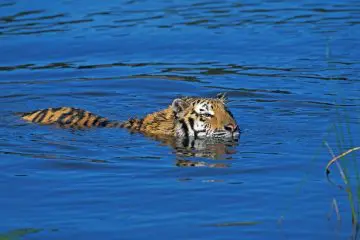
India’s conservation efforts have set several examples of successful wildlife recovery, in which tiger conservation is the most remarkable, especially after the initial challenges and decline. In the last 10 years, India has doubled its tiger population, and now more than 75% of the world’s tigers are found in India; to provide them with inviolate space, there is a network of 58 tiger reserves that supports a healthy population.
This effort resulted in the appearance of tigers in newer areas. Either they are reclaiming the lost land, or they are exploring a new territory. Recently tigers have appeared in many different protected areas after disappearing for decades or even in places where there was no previous record of tigers.
In one of such recent developments, exciting news is coming from D’Ering Memorial Wildlife Sanctuary, a protected area located at the border of Arunachal and Assam and created in memory of Daying Ering, a former Union minister and chairman of the Ering Commission, which influenced the Panchayati Raj system in India. This mosaic of grassland and semi-evergreen forests had supported the tiger population a few decades ago, but it was lost due to an unknown reason, and for the last twenty years there has been no tiger spotted, though indirect tiger signs were reported by the patrolling staff very frequently. The forest of Dibru-Saikhowa National Park, separated from D’Ering Wildlife Sanctuary by the Brahmaputra River, has recorded the presence of tigers.
According to the Divisional Forest Officer (DFO), “This announcement is an immensely proud and emotional moment for everyone associated with D’Ering Memorial Wildlife Sanctuary.”
According to him, the sighting is the result of sustained conservation efforts on the ground and resilience of the ecosystem. The event is the victory of the forest officials, frontline staff, eco-development committee members, and local community and their dedicated commitment.
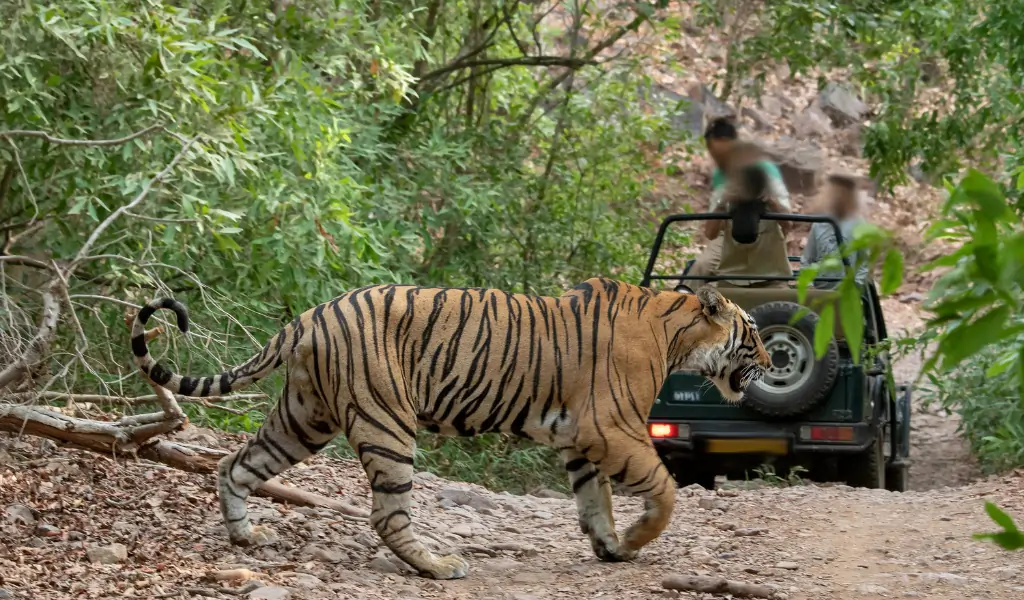
As per the forest department, the image is photographic evidence of a tiger captured by a camera trap 20 years after this sanctuary. This camera trap survey also spotted the critically endangered Chinese pangolin and the rare and endangered grassland specialist Hispid hare.
About D’Ering Memorial Wildlife Sanctuary
This wildlife sanctuary is located near the border of Assam in Arunachal Pradesh. The major vegetation in the sanctuary is semi-evergreen forest and grasslands, in which 80% of the area is covered with grassland and is a home of highly endangered grassland species like the Bengal florican and hispid hare. The sanctuary is a small wildlife sanctuary declared in 1978 and is about 170 sq. km. in area. The sanctuary is home to around 150 species of birds and mammals, including elephants, tigers, sambar, hog deer, and Indian muntjac. The sanctuary also serves as an important elephant corridor connecting the other nearby protected areas and reserve forests. The grassland habitat of the sanctuary also supported the population of Indian water buffalo.
Camera traps play a crucial role in discovering new records from the forests.
Tigers are elusive animals that prefer to avoid human disturbance, which is why most of the tiger areas show only indirect signs of their presence, with no direct tiger sighting reported. A low tiger population is another reason for not having direct sightings of the tigers. A camera trap is a technological innovation that helps to record elusive animals without much effort. The camera trap method has reported recent sightings of tigers from various places where there were no previous reports. It also helps in documenting and monitoring the species which are highly endangered and elusive.
This finding of tigers from a sanctuary after a gap of 20 years is an exciting news for the conservationist and it will give a much-needed boost to the efforts of wildlife and tiger conservation India in India.
Also give a read to Communicable Animal Diseases: A Tragic Death of Tigers & How was my visit to one of the world’s oldest fossil parks in India in 2026

Mr. Vibhav Srivastava is a trained wildlife expert and ecotourism specialist. He has more than 20 years of experience in wildlife research, forest management, conservation education, and sustainable tourism in India.
He works at Tiger Safari India, where he plans exciting wildlife tours, helps spread conservation messages, and creates simple educational programs.
He has worked in all major wildlife areas across Central, Northern, Eastern, and Southern India. His key work includes tiger monitoring across the country with the Wildlife Institute of India, community conservation projects, and training forest staff and nature guides.
He has worked with many groups like RARE India, New Delhi Zoo, Le Passage to India, and Tiger Protection Group. He also served as Chief Naturalist at Kanha National Park.
He is a good teacher and speaker. He has given more than 30 talks at top universities like Delhi University, BHU, Amity University, and IITTM on wildlife protection, ecotourism, and sustainability.
He has written books and scientific papers, and has spoken at national conferences. His focus is always on connecting real science with local communities and responsible tourism.
He has a Master’s degree in Botany and special training from the Wildlife Institute of India. He was also chosen as one of the top five naturalists in India for the TOFT Best Naturalist Award.