Exploring the wilds of India is like stepping into a living library of nature, each forest, river, grassland, and desert holds countless stories waiting to be discovered. From the haunting calls of hornbills in the Western Ghats to the rustle of a cobra in the scrublands of Rajasthan, the country’s extraordinary biodiversity is best experienced when you can recognize and understand the life around you. That’s where field guides come in.
A reliable field guide is more than just a book, it is your companion in the wilderness, helping you identify a bird on a treetop, a butterfly fluttering past, or the footprints of a leopard on a dusty trail. India has a rich collection of guides covering birds, mammals, reptiles, amphibians, butterflies, and even trees, each crafted by passionate naturalists and scientists who have spent years documenting the subcontinent’s natural heritage.
In this first part of the blog, we’ll look at some of the most useful and trusted field guides for India’s wildlife books that every nature lover, traveler, or aspiring naturalist should consider carrying on their adventures. Whether you’re planning your first safari or are a seasoned explorer, these guides will enrich your journey and open your eyes to the incredible details of the wild.
Best All-round Wildlife field Guides of India
All-round wildlife field guides are excellent companions on safari, as they are handy and cover most major faunal groups. However, India is a vast country with four biodiversity hotspots and an incredible range of species, making it nearly impossible to compile everything into a single book. As a result, most field guides are region-specific, and they prove most useful when exploring those particular areas, especially for species identification. Currently, only two comprehensive photographic field guides to Indian wildlife are available, both authored by the same writers.
Photographic Field Guide: Wildlife of Central India:
Authors: Surya Ramachandran and David Raju
This guide focuses on the wildlife of Central India, covering mammals, birds, reptiles, amphibians, butterflies, and dragonflies found in the region. It serves as a handy companion for anyone embarking on an adventure here. Central India is home to a majority of India’s famous tiger reserves, which are among the most sought-after destinations for tourists. These reserves are especially popular because the chances of spotting tigers are generally higher here compared to many other parks.

Strengths
- Visually rich guide covering mammals, birds, reptiles, amphibians, and insects of Central India.
- Especially useful for safaris in Kanha, Pench, Bandhavgarh, Tadoba, and Satpura.
- Compact and portable, with beginner-friendly identification notes.
Limitations
- Region-specific—coverage is restricted to Central India.
- Sections on reptiles and insects are more concise than on birds and mammals.
Suggestion: Recommended
A superb introduction for first-time visitors to Central India’s tiger reserves, though not a substitute for specialist guides.
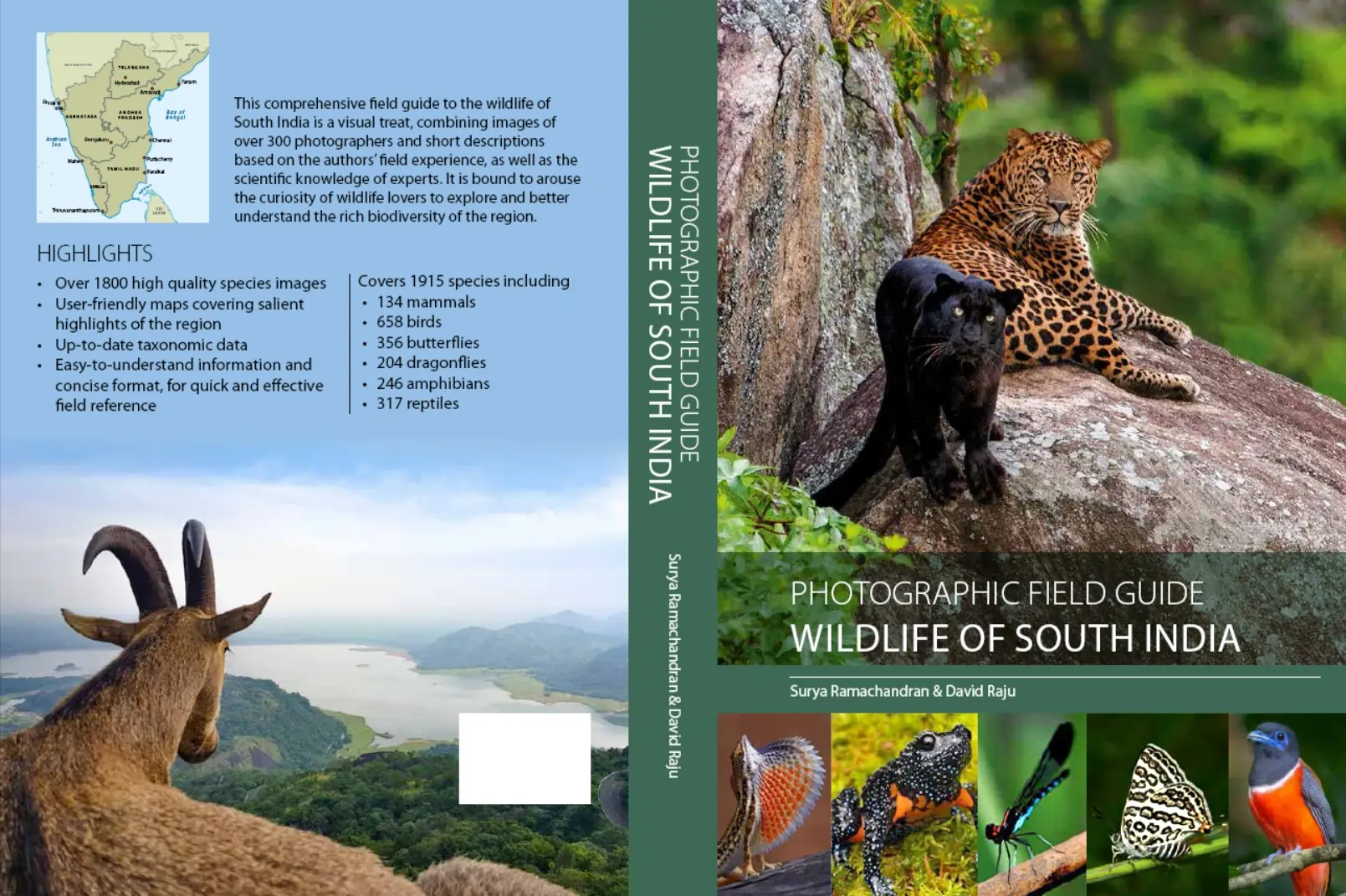
Photographic Field Guide: Wildlife of South India
Authors: Surya Ramachandran and David Raju
From the same authors, this guide serves as a sequel focusing on South India. The region it covers—the Western Ghats—is one of the world’s hottest biodiversity hotspots. Many species here remain little-studied or lack quality photographic records, yet the book still manages to showcase a remarkable variety of species from this unique landscape.
Strengths
- Focused on South India, especially biodiversity-rich landscapes of the Western Ghats and Nilgiris.
- Excellent visuals and engaging ecological notes.
- Covers a wide range of species commonly encountered in southern reserves like Kabini, Bandipur, Periyar, and Anamalais.
Limitations
- Regional focus—less useful outside peninsular India.
- Invertebrates and reptiles receive relatively lighter treatment.
- Maps and seasonal behavior notes could be more detailed.
Suggestion: Recommended
An attractive and practical choice for travelers exploring the forests of South India.
Best Bird Field Guides
With over 1,300 bird species, India is a paradise for birdwatchers. From colorful barbets to elusive owls, a reliable bird guide transforms casual sightings into memorable experiences. There are many bird sanctuaries in India which offers a spectacular sight of thousands of migratory and resident birds flocking over the skies and in the wetlands. Some of these sanctuaries have their own published folders for common birds which is easily available at the souvenir shop in the respective parks but for a more serious birders there are many field guides are available in the market.
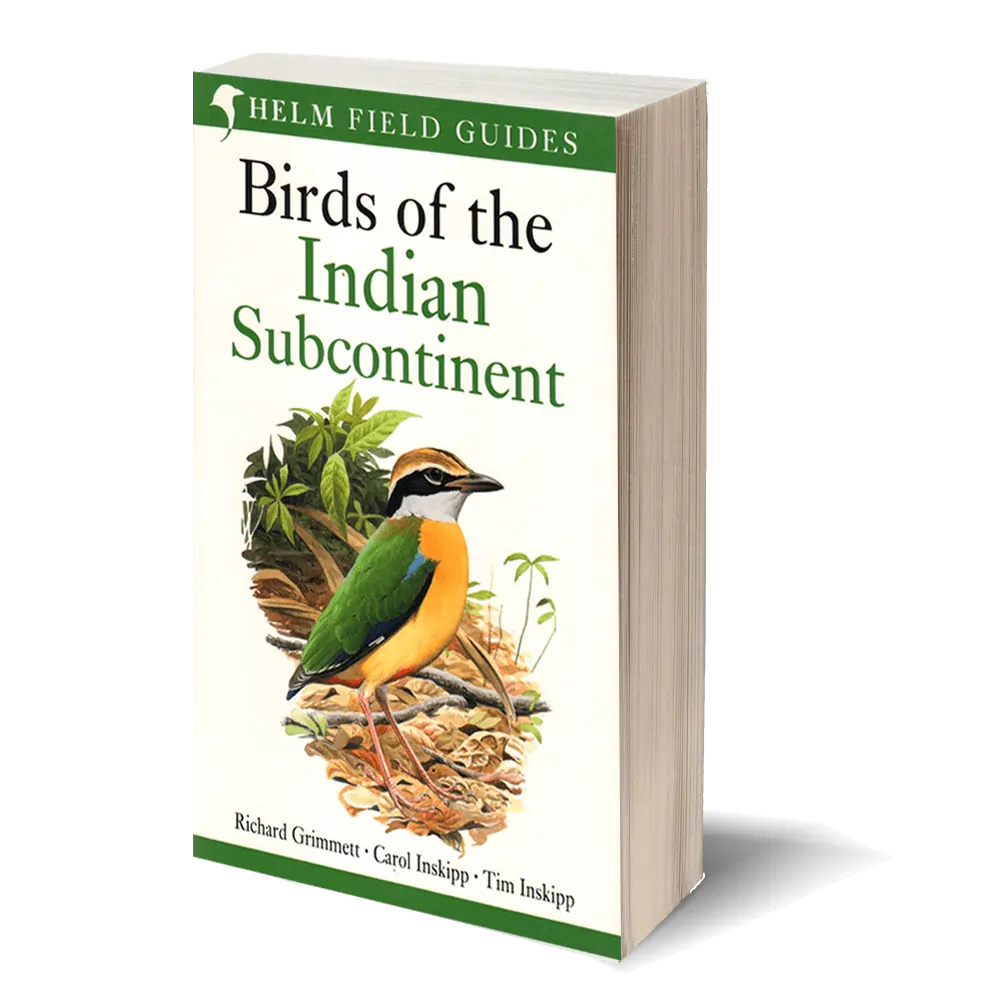
Birds of the Indian Subcontinent
Authors: Richard Grimmett, Carol Inskipp & Tim Inskipp
A book par excellence, this is the most widely used book by the bird watchers of the subcontinent, and you will find it easily on the market or online platforms.
Strengths
- The most comprehensive bird guide covering all species across India and neighboring countries.
- Detailed plates, distribution maps, and clear identification notes.
- A standard reference used worldwide by serious birdwatchers.
Limitations
- Bulky and heavier than pocket guides.
- Illustrations, while accurate, may feel less vibrant compared to photo-guides.
Suggestion: Highly Recommended
The definitive reference for birding in India—ideal for enthusiasts and professionals.
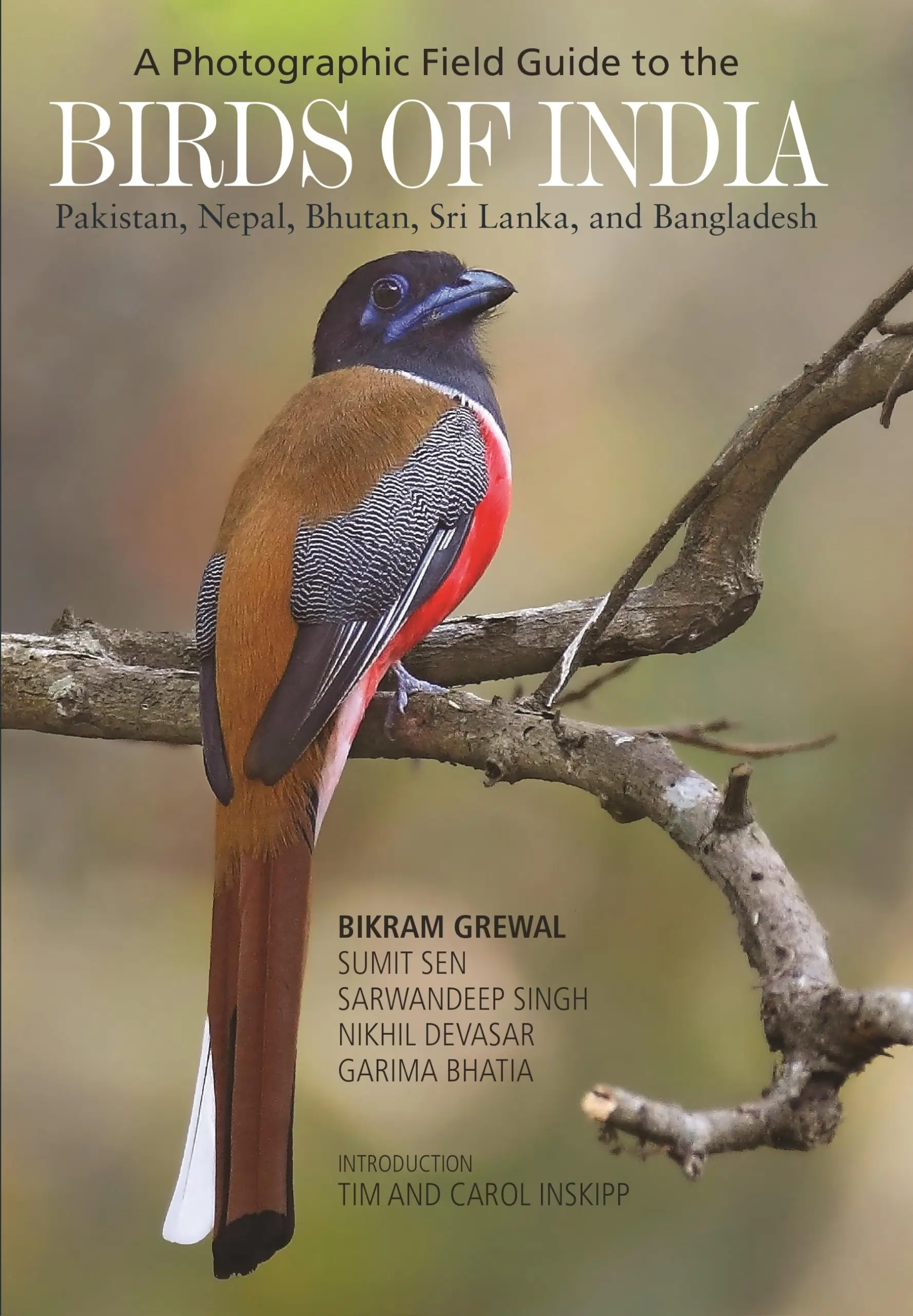
Birds of India – A Pictorial Field Guide
Authors: Bikram Grewal, Sumit Sen, Bittu Sahgal & Others
Strengths
- Stunning photographic coverage of over 1,300 Indian bird species.
- Combines contributions from many leading birders and photographers, ensuring quality images.
- Well-organized with clear species descriptions, habitats, and range maps.
- Makes identification intuitive, especially helpful for those who learn visually.
Limitations
- Larger and heavier than pocket guides, less convenient for field use.
- Slightly less detailed in text compared to Grimmett & Inskipp.
- Beginners may feel overwhelmed by the number of species included.
Suggestion: Highly Recommended
A visually striking and comprehensive guide perfect for birders who prefer photographs over illustrations.
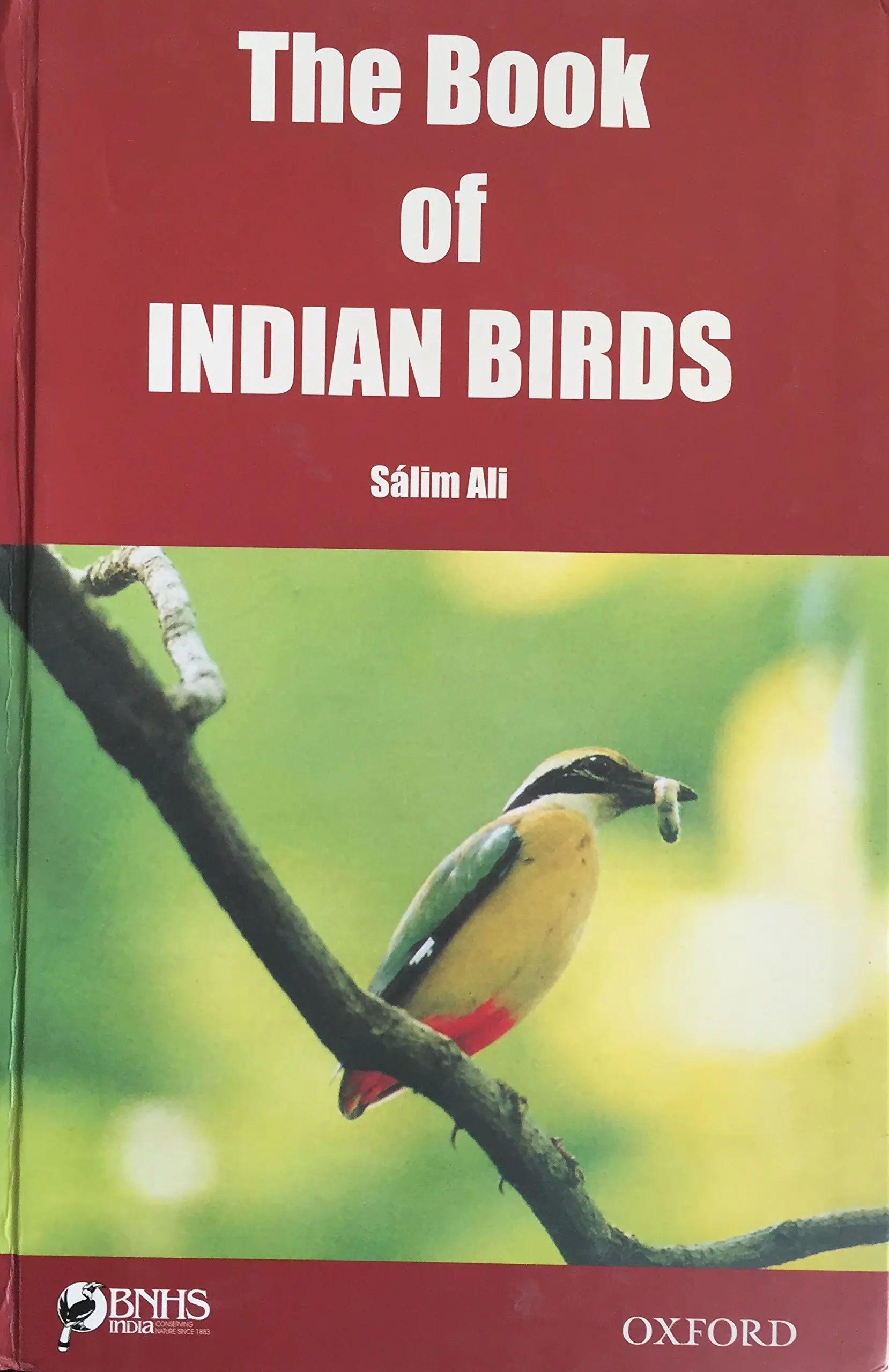
The Book of Indian Birds
Author: Salim Ali (Bombay Natural History Society)
Strengths
- The classic bird book of India, first published in 1941 and revised through the decades.
- Written by Salim Ali, the “Birdman of India”, it remains a foundational reference for Indian ornithology.
- Clear, simple descriptions make it accessible even for beginners.
- Historically important—many Indian birders began their journey with this book.
Limitations
- Coverage is limited, including only around 300 common and widespread species.
- Illustrations are dated compared to modern photo-rich guides.
- Lacks detailed distribution maps or advanced ID notes.
Suggestion: Good as a Supplement
A treasured classic and excellent introduction to Indian birds, but not sufficient as a standalone field guide for serious birding.
Best Mammals Field Guides:
Mammals are among the biggest attractions in wildlife tourism. On safari, India’s mammals often steal the spotlight tigers, elephants, leopards, bears, and wild dogs capture most of the attention. Yet beyond this charismatic megafauna lies a fascinating hidden world of primates, rodents, and bats. India is home to more than 400 species, ranging in size from tiny rats to the majestic Asian elephant. While some of the larger species are relatively easy to identify, many smaller mammals can be surprisingly difficult to distinguish even for experts in the field. This is where field guides become invaluable. A reliable field guide not only aids in identification but also deepens your appreciation of the extraordinary diversity of mammals found across India.
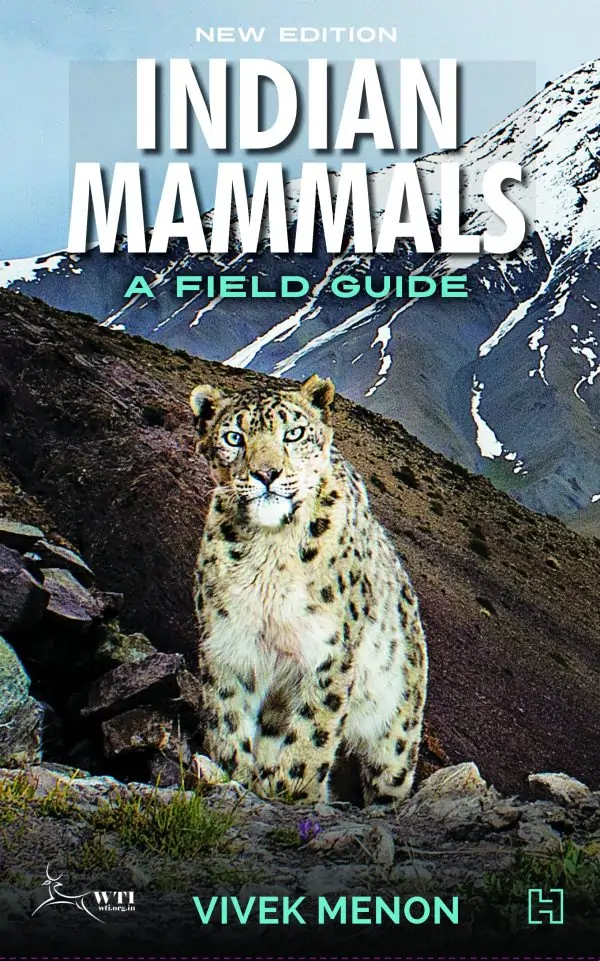
A Field Guide to the Mammals of India
Author: Vivek Menon
Strengths
- The most authoritative and comprehensive guide on Indian mammals.
- Includes nearly every known species with photographs, distribution maps, and concise text.
- Excellent background notes on behavior, habitats, and conservation.
- Clear structure makes it easy to use as both a reference and learning tool.
Limitations
- Slightly bulky—better kept in camp or at home than carried on treks.
- Some photographs are more documentary than visually striking.
Suggestion: Highly Recommended
A must-have for naturalists, serious wildlife travelers, and guides. The single best book for understanding India’s mammals.
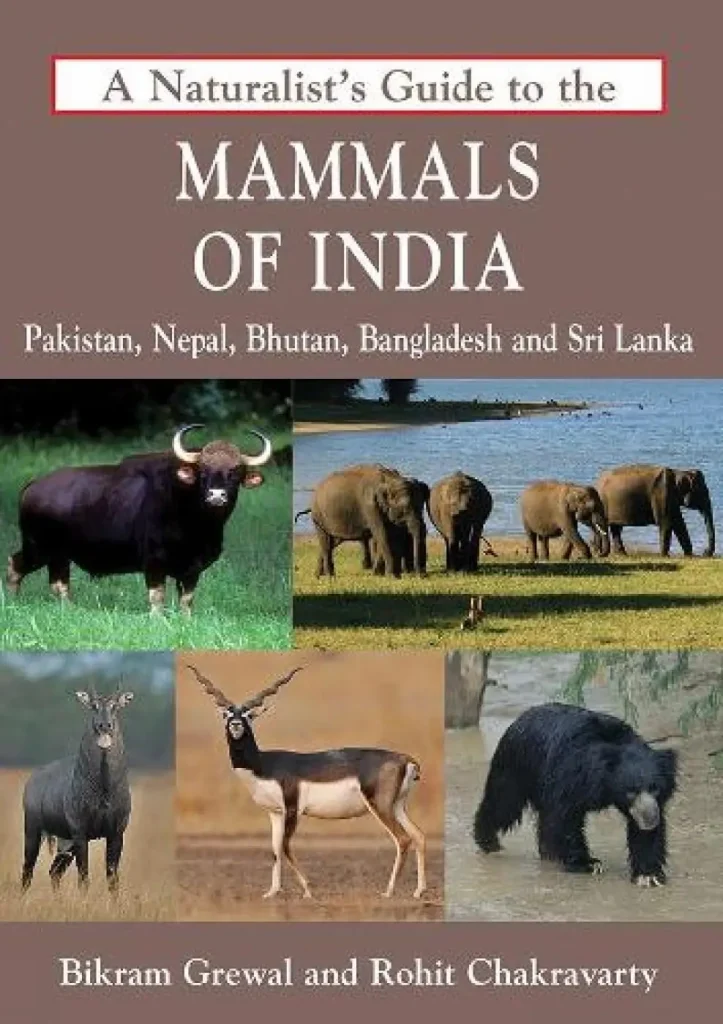
A Naturalist’s Guide to the Mammals of India
Author: Bikram Grewal
Strengths
- Lightweight and highly portable, making it ideal for travel.
- Covers around 140 of the more commonly encountered mammal species in India.
- Features clear photographs with concise notes on identification, distribution, and habits.
- Affordable and accessible—good entry point for first-time wildlife travelers.
Limitations
- Limited scope—does not cover all of India’s mammalian diversity (especially lesser-known species like rodents and bats).
- Text is brief, offering only the basics compared to more detailed guides like Vivek Menon’s.
- Best for casual use rather than serious mammalogy.
Suggestion: Useful but Limited
An easy-to-carry guide for beginners and tourists, but not comprehensive enough for advanced wildlife enthusiasts.
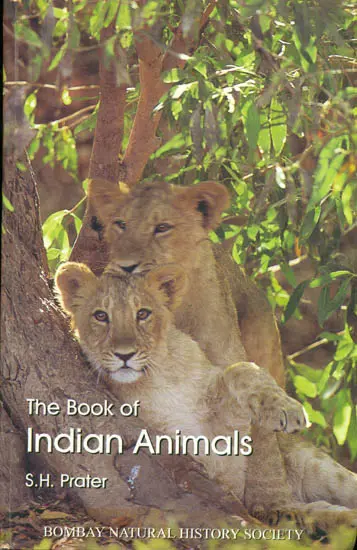
The Book of Indian Animals
Author: S. H. Prater (Bombay Natural History Society).
Strengths
- A landmark classic, first published in 1948 and still respected today.
- It covers around 140 species of larger mammals with detailed descriptions, line drawings, and distribution information.
- Clear, straightforward text that reflects decades of field knowledge.
- Historically significant—one of the earliest authoritative works on India’s mammals.
Limitations
- Outdated in terms of taxonomy, nomenclature, and conservation status.
- Does not cover the full diversity of Indian mammals—focuses mostly on large and well-known species.
- Illustrations, while charming, are dated compared to modern photo guides.
Suggestion: Good as a Supplement (Classic Reference)
An iconic book that remains valuable for historical context and its elegant simplicity but best used alongside modern guides for up-to-date information.
This brings us to the end of the first part of the blog, where we explored some of the key field guides on India’s larger and more charismatic fauna. In the next part, we will shift focus to the often overlooked but equally fascinating world of smaller fauna and flora covering guides on trees, butterflies, dragonflies, and other groups that add depth and richness to the Indian wilderness experience.
Image Credits: Amazon.in, Exotic India, wti.org.in