Corbett National Park is India’s first national park. It was established in 1935 as Hailey National Park, named after Sir Malcolm Hailey, the then-governor of the United Province. The name was later changed to Ramganga National Park in 1955 and eventually to Corbett National Park, in honor of the hunter-turned-conservationist Mr. Edward James Corbett, who worked to conserve wildlife in the region by raising awareness among local communities. In 1973, Project Tiger was launched in India to protect tigers in their natural habitat, and Corbett National Park was the place from which it was launched, making it the first official tiger reserve in India.
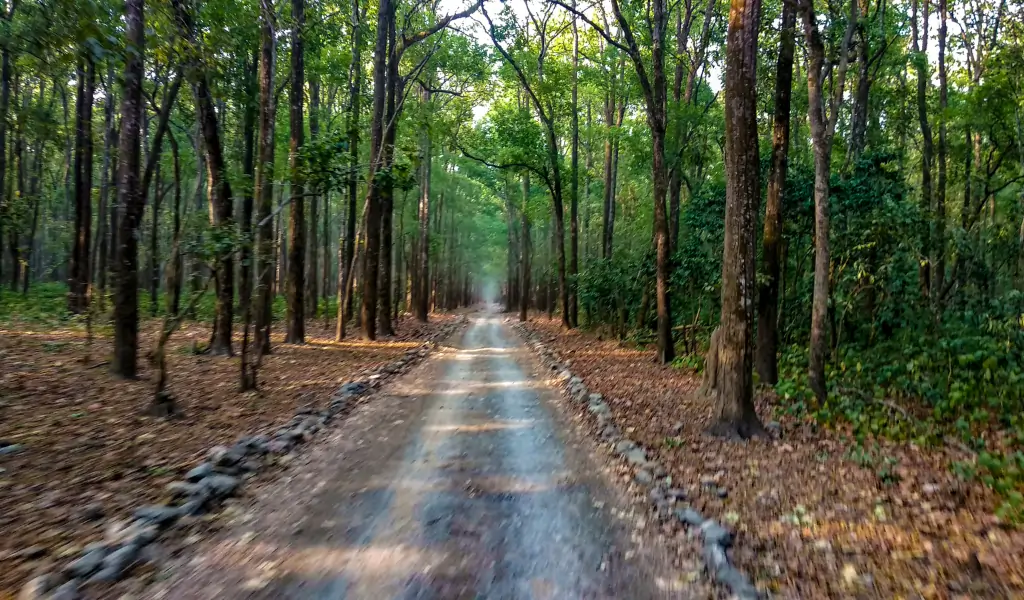
The Corbett Tiger Reserve is situated where the Gangetic Plain, the Shivalik Hills, and the Himalayan foothills meet, making it one of the most biodiverse regions. Its proximity to the Central Indian highlands also allows the flora and fauna from that area to be found within Corbett. Most parts of the Corbett fall within the Shivalik, which is made up of loosely packed boulders, pebbles, mudstones, etc. The rest of the region is part of the Himalayas and Terai Arc landscape.

Corbett and Tigers
Corbett Tiger Reserve and its surrounding landscape are always in the news for its tigers. Tigers are not restricted within the reserve; they are everywhere, and the Corbett Tiger Reserve is known to have the highest numbers of tigers in any reserve. According to the previous census, the tiger population in Corbett is around 260 within the reserve, while more than 319 tigers are utilizing the tiger reserve as a part of their territory and home range. The area was known for its maneater tigers and leopards during British time but after conservation started, the cases of conflicts are very rare and are dealt with quickly by the forest department.
Land of the Roar, Trumpet and Song
Corbett is known as the land of roar, trumpet, and song, which means the reserve is famous for tigers, elephants, and birds. But the diversity of Corbett is not restricted to tigers, elephants, and birds; it is much beyond that. For a visitor who is really interested in wildlife, there are so many things to see, including critically endangered and endangered species of flora and fauna. Here are the details of different groups of animals and plants that form the many attractions of the Corbett.

Mammals
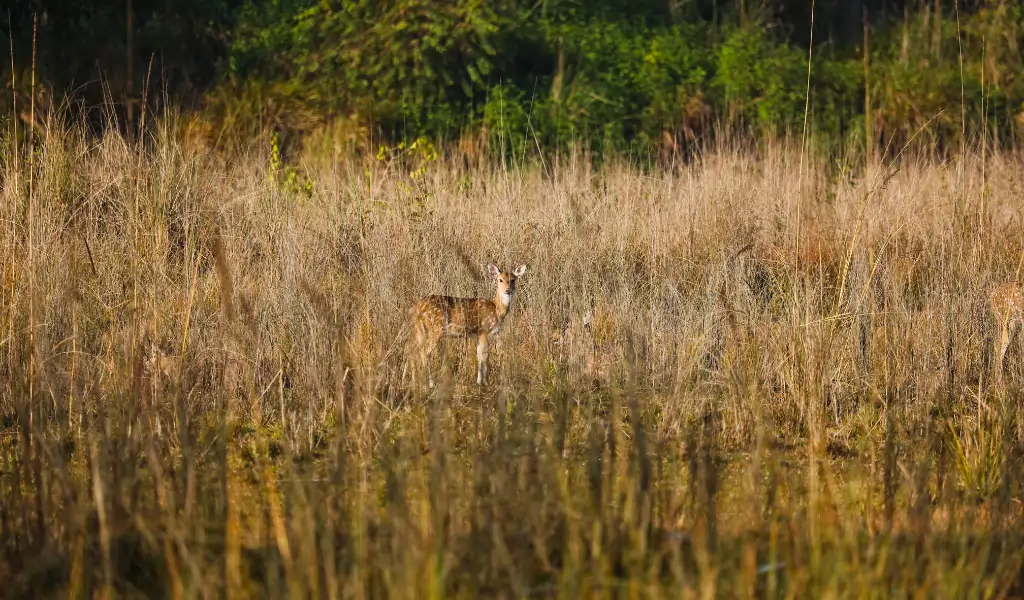
Mammals are the major attraction of the reserve; the big mammals include tigers, leopards, elephants, sloth bears, etc. Watching a herd of elephants in the vast grasslands of the Dhikala zone is a memorable sight that all visitors love to witness. There are more than 50 mammal species that have been reported from Corbett so far, which include various species of deer, two species of primates, jackals, hyena, civets, marten, serow, and goral, etc.
Birds
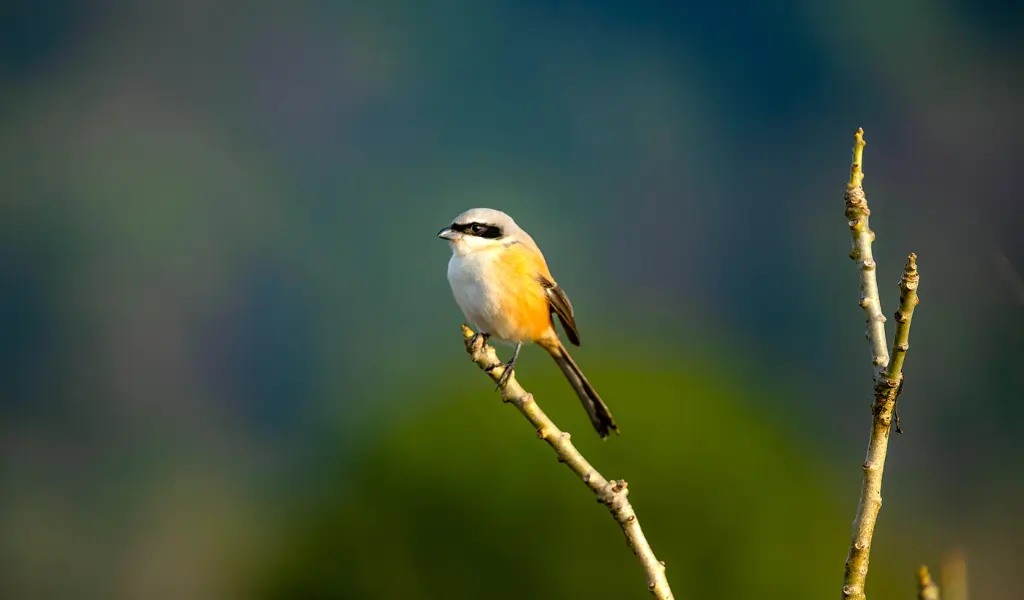
As mentioned above, the tiger reserve is a birder’s paradise, and more than 550 species of birds have been reported from this landscape so far. This is one of the highest counts for any protected area. The diverse habitat and altitudinal range support the residents, passage migrants, and migratory birds in large numbers. Because of its bird diversity, it is recognized among ‘Important Bird and Biodiversity Area in India.’ People visit here to watch birds like the Great Hornbill, oriental pied hornbill, Collared Falconet, Ibisbill, Black Francolin, long tailed broadbills, and Great Slaty Woodpecker.
Reptiles
The next major group of animals in Corbett is Reptiles. The reserve is renowned for its diverse reptile species, including snakes, lizards, turtles, and crocodiles. About 55 reptile species have been reported here, and the Gangetic Gharial is a critically endangered crocodile species found in the waters of Ramganga and its tributaries. The reserve also hosts a sizable population of King Cobra, the world’s largest venomous snake. Three of India’s top four snakes are found here, including the spectacled cobra, the common krait, and the Russell’s viper. The Burmese python is also present. Among turtles, the Ganges softshell turtle, the Indian roofed turtle, the Indian tent turtle, and the Indian flapshell turtle are common. The monitor lizard is the largest in the reserve.
Amphibians
Though not much, the moist and evergreen forest supports 15 species of amphibians in Corbett. These 15 species of amphibians are mainly frogs with three species of toads. The common ones amongst them are the common Indian toad, skittering frog, Indian bullfrog, common Indian tree frog, and skittering frog.
Butterflies
Butterflies are the most colorful flying insects, and they attract artists, poets, and photographers who admire their beauty and colors. 150 species of butterflies have been reported from Corbett so far. Watching butterflies in Corbett is possible either when you are on a jeep safari, from where you can see only those who landed on the bush near the road, or you can spend your free time looking for them in the natural premises of the forest rest houses and resorts where you are staying. Another option is to visit the villages, where you can explore the butterflies in the bushes with someone. You can watch butterflies here are the Common rose, the Common bluebottle, the Common jezebel, Pierrots, Cupids, Grass Jewel, etc.
Odonates
Other insect attractions in Corbett are the Odonates. The order Odonata consists of dragonflies and damselflies, both of which are winged insects with colorful bodies and wing patterns. They are mostly found near the marshes, forests, and other wetlands. They lay eggs in or near the water or on the vegetation found in the water. In Corbett, there are more than 40 species of Odonates found, and people often love to photograph or observe them. They can be photographed and observed in a similar way to butterflies, but near any wetland.
Fish
Corbett is not only famous for the jeep safari in the jungle but is also famous for angling for the fish found in the waters of several hill streams flowing through the landscape. Golden Mahseer & Giant Devil Catfish are the most prized catch for the anglers. Considering their big size and strong bodies in the rapids of the Himalayan rivers, they are always a major attraction for anglers from every corner of the world. Those who are not into angling, a mere sighting of these fish in the cold waters of the Himalayan River flowing through the reserve is a major attraction. Due to their big size and agility, they are called the tigers of the rivers.
Spiders
Though people might have Arachnophobia, some people love to watch spiders, and they are the major attraction for them. The Indian giant wood spider, which is predominantly a forest spider, and the signature spiders are the most common species of spiders in Corbett and are also very photogenic.
The Flora
The flora of a region is an indicator of the biodiversity richness, and it forms a major part of the habitat for wildlife. The flora of a region and its composition decide the vegetation, such as forests, grassland, etc. The vegetation of a region creates a microclimate that supports various other life forms, including big mammals. Flora consists not only of trees, shrubs, and herbs but also of small plants like ferns, mosses, lichens, and even algae. Fungi are generally not considered in flora but are also a beautiful group of organisms with many colorful species found in decaying wood and other dead materials.
Floristically, Corbett is very rich, and more than 600 species of plants have been described so far, including trees, shrubs, herbs, and ferns. Lichens, mosses, and algae are not included.
Identifying common trees, shrubs, herbs, and grasses does not require special skills; it needs only passion. There are many sources available online, as well as books from which one can take a reference to identify a particular species. Trees are generally an attraction because of their size and easy visibility; the other major attraction is the orchid. There are many species of orchids found in this reserve, and because they have beautiful flowers, they are the favorites of many.

Conclusion
Corbett Tiger Reserve, being a part of the biodiversity hotspot of the Himalayan foothills, supports a wide array of species apart from the tigers, which are not only attractive but also play a major role in the ecosystem. They are mammals, birds, butterflies, dragonflies, spiders, and even plants. On our safari, if we keep looking for everything that comes, we never get bored, and even if we haven’t seen a tiger, we are still very much satisfied.




0 Comments