1. Canines
- Definition: Long, sharp, and pointed teeth located at the front corners of the mouth.
Nature equips predators with remarkable tools for survival, and among the most lethal are their specialized teeth, particularly canines. These long, sharp, and pointed teeth are designed for gripping, puncturing, and tearing flesh, making them essential weapons in the wild. Carnivores, such as lions, tigers, and wolves, rely heavily on their canines to secure their place as apex predators.
Big cats like lions and tigers use their powerful canines to grip their prey’s neck, delivering suffocating bites that quickly incapacitate. Wolves, with their strong jaws and sharp canines, latch onto prey and tear flesh with precision. Even marine predators like orcas wield canines to capture and kill seals and fish, demonstrating the versatility of these deadly tools across habitats.

The size and strength of canines often reflect an animal’s diet and hunting style, showcasing nature’s ingenuity in designing predators equipped for survival.
2. Carnassials
- Definition: Specialized molars and premolars found in carnivorous mammals.
In the wild, survival hinges on efficiency, and carnassials are a prime example of evolutionary precision. Found in carnivorous mammals like big cats and hyenas, these specialized teeth are molars and premolars designed for processing meat and bone. Sharp and blade-like, carnassials effortlessly shear flesh and crack bones, turning prey into digestible portions.
Located at the back of the mouth, carnassials serve different purposes depending on the predator. Big cats, such as leopards, rely on their carnassials to slice meat into manageable pieces, ensuring they can consume their meals quickly before scavengers arrive. Hyenas take these tools to another level, using their carnassials to crush bones and access nutrient-rich marrow.

This anatomical adaptation highlights the incredible efficiency of predators in the animal kingdom, allowing them to maximize every meal with deadly precision. Carnassials truly embody nature’s edge in the arms race of survival.
3. Incisors
- Definition: Small, chisel-shaped teeth located at the very front of the mouth.
Teeth are more than tools for chewing; in the animal kingdom, they can be deadly weapons. Incisors, the small, chisel-shaped teeth at the front of the mouth, play a surprising role in hunting and survival. Straight-edged and razor-sharp in some species, these teeth are designed for precision cutting and scraping.
In carnivores, incisors are crucial for tearing meat from bone or manipulating food. Rodents like beavers and rats use their ever-growing incisors to gnaw through tough materials, while vampire bats wield their incisors to create clean cuts for drinking blood. These adaptations highlight how evolution tailors teeth to fit dietary and predatory needs.
From slicing prey to accessing hidden nutrients, incisors are an understated yet vital weapon in the animal arsenal, proving that even small teeth can pack a deadly bite.
4. Fangs
- Definition: Enlarged, hollow or grooved teeth often associated with venomous animals.
Fangs are nature’s precision tools, enabling predators to hunt and kill with deadly efficiency. Found in many venomous animals, these specialized teeth are often hollow or grooved, designed to deliver venom directly into prey. This venom can immobilize or kill, giving predators a significant advantage.
In snakes like cobras and rattlesnakes, fangs are connected to venom glands, allowing them to inject lethal doses during a strike. These hollow structures act as hypodermic needles, ensuring venom reaches its target swiftly. Similarly, the Gila monster, a venomous lizard, uses grooved fangs to channel venom into wounds inflicted by its powerful bite.

Fangs showcase evolution’s ingenuity, perfectly adapted for predators that rely on toxins for survival. Whether paralyzing prey or deterring threats, these deadly teeth highlight how specialized adaptations shape the natural world.
5. Tusks
- Definition: Enlarged, elongated incisor teeth protruding outside the mouth.
Nature has equipped many animals with specialized teeth to dominate their environments, but few adaptations are as impressive or versatile as tusks. These elongated, curved incisor teeth serve as powerful tools for survival. Built for strength, tusks are primarily used for defense, combat, and even killing prey.
Walruses, for instance, wield their tusks to establish dominance, fend off rivals, and occasionally take down smaller prey. Similarly, narwhals boast a single spiraled tusk, which some scientists believe aids in sensory perception or assists in hunting. While not always directly involved in killing, these unique teeth highlight the incredible ways animals adapt to their ecological roles.

Tusks are a fascinating example of how evolution transforms simple structures into extraordinary weapons, helping animals hunt, defend, and thrive in challenging environments.
6. Beaks and Tomial Teeth
- Definition: Sharp projections or edges in birds of prey, resembling teeth.
In the animal kingdom, sharp teeth are often synonymous with survival, enabling predators to hunt, kill, and consume prey. But not all deadly bites rely on traditional teeth. Birds of prey, for example, showcase a fascinating adaptation: tomial teeth—razor-sharp notches on the edges of their beaks that mimic the function of true teeth.
Unlike mammals, which rely on jaws lined with multiple teeth, raptors like falcons and owls depend on their curved, powerful beaks. Falcons are particularly deadly, using their tomial teeth to deliver a precise “killing bite” that severs the spinal cord of their prey. This efficiency minimizes struggle, ensuring a quick kill. Meanwhile, owls use their sharp, hooked beaks to tear flesh into smaller, consumable pieces, bypassing the need for true teeth altogether.
These avian adaptations highlight nature’s ingenuity. Tomial teeth allow birds to exploit specific niches, hunting with precision and efficiency. Whether delivering a fatal bite or slicing through flesh, the beaks of birds of prey demonstrate that deadly “teeth” come in many forms, even when they aren’t teeth at all.

From falcons to owls, these sharp projections redefine what it means to have a bite that kills.
7. Labial Teeth (in Amphibians)
- Definition: Tiny, keratinized structures resembling teeth in the mouths of some amphibians.
Labial teeth are not true teeth but serve an important function in the upper jaws of these animals. They are designed to grip and hold slippery prey, such as insects and small animals, preventing escape during feeding. This adaptation is especially useful for amphibians that often feed in wet environments, where their prey can easily slip away. While labial teeth lack the cutting or crushing capabilities of other tooth types, their simple yet effective design is key to survival in their ecological niche.

This is just one example of how animals have evolved diverse dental adaptations. Whether it’s for slicing, crushing, gripping, or injecting venom, specialized teeth highlight nature’s ingenuity and the incredible variety of life’s survival strategies.
8. Needle-Like Teeth
- Definition: Long, thin, and sharp teeth designed for gripping slippery prey.
One of nature’s most fascinating adaptations for hunting is the evolution of needle-like teeth. These teeth are long, thin, and sharp, making them ideal for gripping slippery prey. Their unique design allows them to interlock tightly, ensuring that once a predator seizes its prey, there is little chance of escape. This feature is particularly useful for aquatic hunters who rely on these teeth to hold onto swift, slick fish and other aquatic creatures.
Needle-like teeth are specialized for holding rather than chewing. Their structure enables predators to pierce and secure their prey, preventing even the most agile animals from slipping free. Examples of animals with needle-like teeth include piranhas and moray eels. Piranhas use these sharp teeth not only to grip their prey but also to shear flesh with precision, making them notorious for their efficient and deadly bites. Moray eels, on the other hand, utilize their needle-like teeth to latch onto fish in aquatic environments, where holding onto prey is particularly challenging due to water resistance and the prey’s slippery scales.
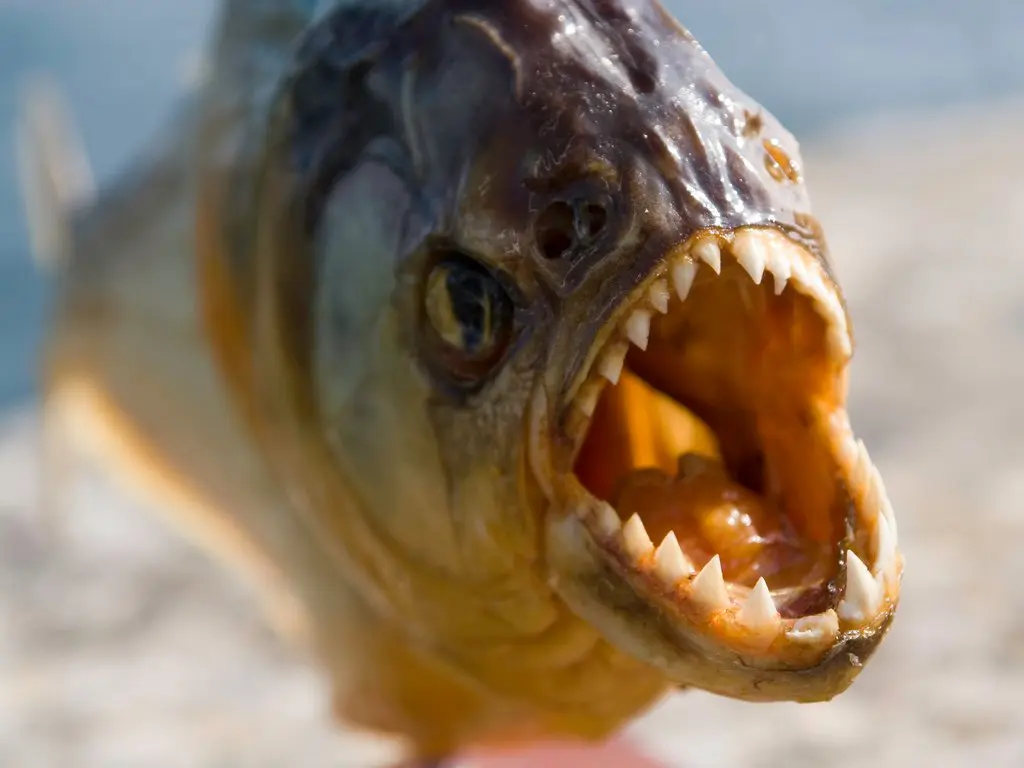
These specialized teeth demonstrate the incredible adaptability of predators, showcasing how evolution shapes features to maximize survival and hunting efficiency in diverse environments.
9. Molars
- Definition: Broad and flat teeth located at the back of the mouth.
Molars, the broad and flat teeth located at the back of the mouth, play a vital role in the animal kingdom, particularly among predators and omnivores. These specialized teeth are primarily designed for crushing and grinding, enabling animals to process tough materials and even break bones. Their structure and functionality highlight the incredible adaptability of animals to their dietary needs and survival strategies.
In omnivores like bears, molars are multipurpose tools. They crush prey bones to access nutritious marrow while also breaking down fibrous plant materials, showcasing their adaptability in diverse ecosystems. For carnivores such as wolves, molars are essential for crushing bone fragments and consuming carcasses efficiently, ensuring no part of their prey goes to waste.
The robust design of molars reflects evolutionary pressure to maximize energy extraction from food. These teeth work in tandem with other specialized teeth, like sharp canines, to deliver powerful bites. Together, they form a deadly toolkit that enables predators to hunt, kill, and consume their prey with precision.

From cracking bones to grinding tough vegetation, molars are a prime example of how animals have evolved specialized tools to thrive in their environments. Their role in survival is as fascinating as it is essential.