When we think of tigers, the image that often comes to mind is that of a majestic big cat prowling through dense forests or grasslands. However, Bengal tigers, the most numerous tiger subspecies, possess an incredible, lesser-known skill: they are excellent swimmers. This ability sets them apart from many other big cats and provides significant survival advantages.
How Do Bengal Tigers Swim?
Bengal tigers are powerful and adept swimmers, often covering substantial distances in water. Their swimming technique is both elegant and efficient. Here’s how they do it:
1. Body Adaptations
Bengal tigers possess physical adaptations that make them excellent swimmers. They have webbing between their toes, which acts like a natural paddle, enabling them to push against the water more effectively. This webbing increases the surface area of their paws, allowing for stronger and more efficient strokes. Additionally, their large, muscular bodies provide the necessary strength for powerful propulsion through water. These muscles, developed for strength and speed on land, are equally effective in aquatic environments, allowing tigers to navigate through water with ease.
2. Buoyancy
Buoyancy plays a crucial role in a Bengal tiger’s ability to swim. Their muscular build and the layer of fat beneath their skin contribute to their buoyancy, helping them float effortlessly. This natural buoyancy reduces the energy required to stay afloat, allowing them to swim for extended periods without tiring quickly. Their buoyant bodies enable them to paddle with strong, steady strokes, maintaining their position in the water even in strong currents or turbulent conditions.
3. Stroke Technique
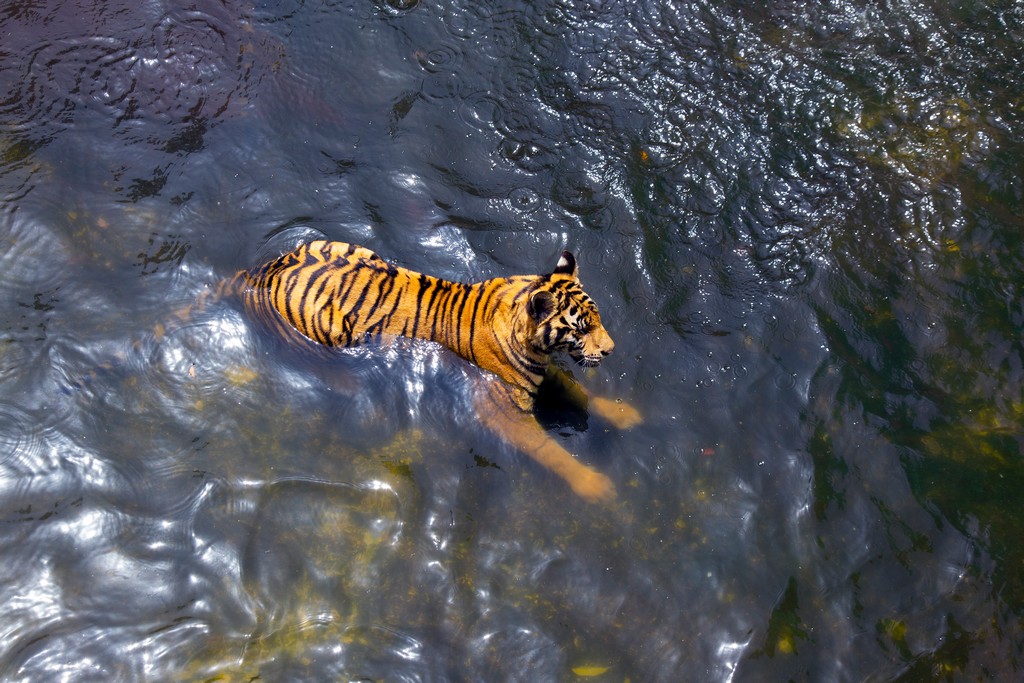
The swimming stroke of Bengal tigers is similar to the doggy paddle. They use all four legs to propel themselves forward, creating a balanced and efficient movement through the water. Their front legs pull the water back while their hind legs push, providing continuous propulsion. This technique allows them to swim at a steady pace, covering significant distances without losing speed or stamina. The coordination of their limbs ensures that they move smoothly and efficiently, conserving energy during long swims.
4. Breathing
Breathing while swimming is another crucial aspect of a Bengal tiger’s aquatic skill set. Unlike some animals that may need to submerge and resurface frequently, tigers keep their heads above water, ensuring they can breathe easily and continuously. This allows them to navigate efficiently, as they do not need to interrupt their swimming to come up for air. Their elevated head position also helps them maintain a clear line of sight, enabling them to watch for prey, potential threats, or landmarks in their environment.
Also Read: Roars and Rumbles of Tigers: Tiger Sounds and Purposes
Why Do Bengal Tigers Need to Swim?
Swimming is not just a skill but a necessity for Bengal tigers due to several reasons:
1. Territory Expansion
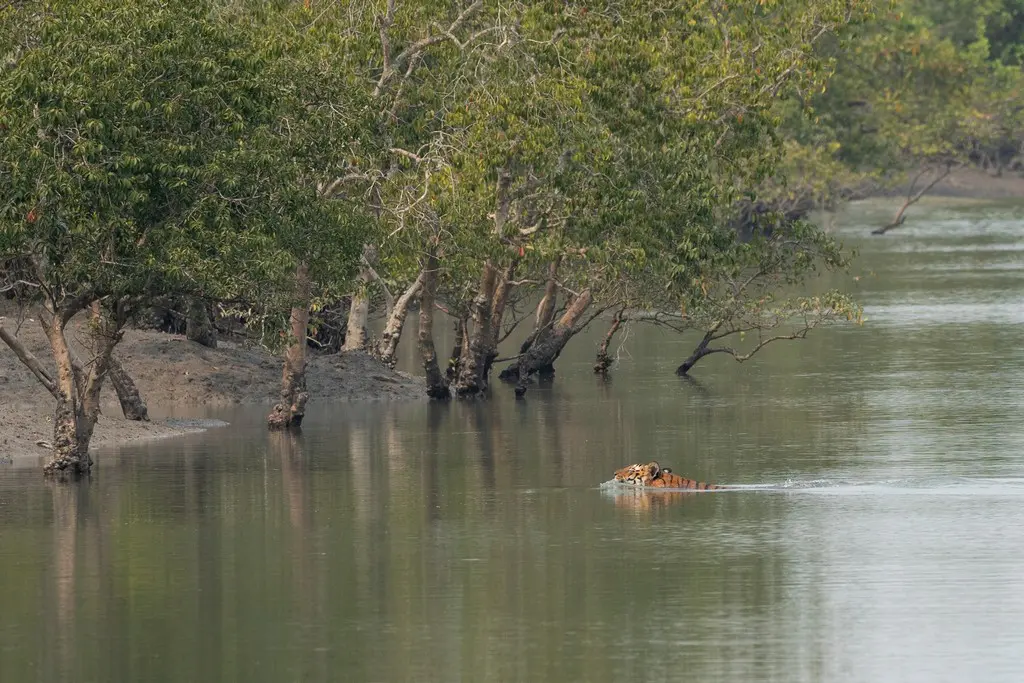
In regions like the Sundarbans, a vast mangrove forest straddling India and Bangladesh, the landscape is characterized by an intricate network of water channels and islands. For Bengal tigers living in this unique habitat, swimming becomes a crucial means of moving between these islands. By swimming, tigers can patrol larger territories, ensuring they have access to ample hunting grounds and resources. This ability to traverse water bodies allows them to establish and defend extensive territories, which is vital for their survival and reproductive success. Swimming also helps tigers avoid conflicts with rivals by enabling them to explore and claim new areas that might be inaccessible to other predators.
2. Hunting and Foraging
Bengal tigers’ proficiency in water significantly enhances their hunting and foraging capabilities. They can pursue prey that seeks refuge in water, giving them a unique advantage over land-bound predators. For instance, prey animals such as deer or wild boar might enter water bodies to escape, but tigers can follow them, using their swimming skills to catch them. Additionally, tigers often hunt aquatic animals such as fish and small reptiles, supplementing their diet with a variety of prey. This adaptability in hunting techniques ensures that tigers have a broader range of food sources, which is particularly important in environments where terrestrial prey might be scarce or highly mobile.
3. Escape from Heat
Swimming also plays a critical role in thermoregulation for Bengal tigers. In the hot and humid climates where they often reside, such as the Indian subcontinent, temperatures can soar to extreme levels, especially during the summer months. To escape the scorching heat, tigers frequently take dips in water bodies like rivers, lakes, and swamps. Immersing themselves in cool water helps regulate their body temperature, preventing overheating and dehydration. This behavior is not only essential for their comfort but also for their overall health and well-being. By cooling down in water, tigers can maintain their energy levels and continue their daily activities, such as hunting and patrolling their territories, without succumbing to the adverse effects of heat stress.
Also Read: Facts About Bengal Tiger Fur, Claws, Canines, Eyes & Ears
Comparison with Other Cats and Reptiles
Compared to other big cats, Bengal tigers stand out as exceptional swimmers. For instance, lions and leopards are not as inclined to swim and avoid water whenever possible. This reluctance limits their ability to navigate watery terrains or hunt aquatic prey.
In comparison to reptiles, such as crocodiles, Bengal tigers might not match their aquatic agility, but they surpass them in terms of speed and distance covered. Crocodiles are excellent ambush predators in water but do not have the stamina for prolonged swims, whereas tigers can swim steadily for hours, giving them an advantage in traversing large water bodies.
Bengal tigers’ swimming capabilities highlight their adaptability and versatility as apex predators. This unique skill not only sets them apart from other big cats but also provides them with critical survival advantages in their diverse habitats. Their ability to swim efficiently ensures they can thrive in environments where water is a dominant feature, securing their place as one of the most formidable and adaptable animals in the wild.